| August 31, 2026 |
NatNews |
ISSUE 233 |
ULTRASOUND USE IN PHYSICAL THERAPY
|
Ultrasounds aren’t only for hospital and OB/GYN settings. In fact, therapeutic ultrasound is a non-invasive method often used in physical therapy and pain management. This form of ultrasound differs from diagnostic ultrasound used for imaging, as its purpose is to provide therapeutic energy that helps improve muscle and soft tissue function. Such a form of therapy uses an ultrasound machine that conducts an electrical signal through crystals found in the head of the ultrasound probe. The crystals vibrate and create mechanical waves that transfer energy to the surface of the human body or may be focused to target soft tissue deep to the outermost layer of the skin. Muscle and bone tissues, which contain a higher amount of proteins, absorb the energy from the mechanical waves at a higher rate than fatty tissues that have higher water content. The energy produced as a result of the ultrasound can affect tissues deep to the surface without causing harm to more superficial tissues. Physical therapists often incorporate ultrasound therapy into their practices with their patients as a form of treatment for injuries, chronic pain, and post-surgical recovery and to support healing by improving blood flow and tissue repair. “Anecdotally, I’ve found therapeutic ultrasound most useful for tendinopathy and irritated soft tissues—think inflammation,” Lyndsy Nevitt, Dallas-based doctor of physical therapy and owner of Bear PT & Pilates, said. “The sound waves create mechanical and thermal effects that can increase tissue movement and blood flow, potentially helping with pain and healing of those inflamed tissues.” As mentioned by Nevitt above, there are two main forms of therapeutic ultrasound: thermal and mechanical. Thermal ultrasound delivers deep heat to a targeted area of the body, helping reduce pain, improve circulation, and promote the healing process. Mechanical ultrasound applies slight vibrations to soft tissue in the affected area to help break down scar tissue and cause gas bubbles to form, which then expand and contract, reducing swelling and inflammation and promoting soft-tissue healing. |
Nevitt noted that, with her patients, she uses therapeutic ultrasound as a treatment modality rather than as a preventative measure. “In my practice, I use it most often with subacute or chronic overuse-related injuries involving irritated soft tissue, such as tendinopathy,” she said. Therapeutic ultrasound is generally regarded as a safe form of treatment when it is administered by a trained professional. However, as Nevitt acknowledged, there are certain conditions that should not be treated with ultrasound and individuals who should not incorporate it into their treatments. “You don’t want to use it on active malignancies, active deep vein thrombosis (DVT), bleeding disorders, and with pregnant women,” she said. “There are other potential risks, so it’s important to talk with the patient to have a full understanding of their medical history.” Therapeutic ultrasound is most effective when used as part of a combined approach rather than a standalone treatment. It is commonly integrated with other active physical therapy treatments and interventions to improve circulation, tissue expansion, and healing, promoting more efficient function and recovery. “For me, ultrasound is a small tool in my toolbox that I use as needed,” Nevitt said. “It is part of a broader rehabilitation program that includes therapeutic exercises, manual therapy, dry needling, etc. Ultrasound is used to help manage symptoms along with the other modalities and treatment techniques.” |
DID YOU KNOW?
|
Croissants originated in Austria and were called kipferls before making their way to France centuries later. |
"WHAT'S MY AGE AGAIN?" DOES NOT APPLY HERE
|
The friendship between Anne Hathaway’s and Robert De Niro’s characters in The Intern depicted what is actually quite a healthy notion. Research has found that intergenerational friendships have several benefits, including diminishing certain biases, looking at or approaching issues or situations from different viewpoints, feeling more satisfied with the aging process, and increasing longevity. Dallas resident Kevin Roberts, who is in his 60s, said he truly enjoys having friends of all ages. “The majority of my running friends are quite a bit younger,” he said. “I love and feel I benefit from the energy and positivity. It’s also always been interesting to hear different perspectives, as well.” Roberts also acknowledged that he thinks intergenerational friendships can lead to better overall emotional wellness and social benefits. “Surrounding yourself with people from different age groups gives you a broader perspective and a deeper understanding of life,” he said. Like Roberts, Dallas-area resident Jessica Smith, who is in her 40s, also finds value in building and maintaining friendships with individuals of different ages. “I really feel like having friends from a younger generation keeps you open-minded and possibly helps break old habits,” she said. “Not to mention, they keep me young with their fresh ideas, fashion, and music. Having older friends has always helped give me perspective in many ways. I love hearing from older people as to what they would or would not do differently in lives and their perspectives, and a lot of times, older people are more about living in the moment and less drama.” According to AARP research, people getting to know one another as individuals can help break down stereotypes—an older person can view a younger friend as more than “young” or “inexperienced,” while someone in a younger generation can see an older friend as more than “retired” or “out of touch.” And as Smith pointed out, such friendships have the ability to improve one’s overall well-being. “I do think that this can lead to better social and emotional health due to possibly finding a good balance of younger perspectives and older grounding and wisdom in life,” she said. Dallas resident Chet MacArthur, who is in his mid-20s, noted that people primarily only tend to be friends with others who are their same ages when they are growing up, though he doesn’t believe that this is the model to follow later in life. “In adulthood, I’ve realized that friendship doesn’t need to be limited by age and that you can find people with similar interests in any age group,” he said. “Being in my 20s, it’s nice to have friends who are older than I am because I learn a ton and lean on people who have experienced what is coming as I get older.”
|
MacArthur said, as a whole, he thinks that it’s a wise practice to be able to be friends with someone of any age. “It allows you to have a much more open mindset on things,” he said. “It also opens up social opportunities greatly. It’s much easier to find people with similar interests if you don’t necessarily limit by age.” MacArthur added that he thinks there are other advantages to having generational gaps in some friendships or at least with people in proximity. “The best way to learn and gain perspective on things is through people who are older and more experienced than you,” he said. “It also allows you to see other parts of life that you wouldn’t if you only kept friends within a close age.” The aforementioned recent AARP study found that 71 percent of adults with an intergenerational friend said neither person was surprised when the friendship formed. Rather, the relationship felt like a natural result of spending time with one another. Roberts said he doesn’t think it’s necessarily easy to develop deep friendships with people of substantially different ages, but he appreciates when it does occur. “It absolutely can’t be forced but can happen if there are common interests,” he said. “There are preconceived hurdles to overcome, whether you’re the older or younger person in the friendship, but if it happens, it can be awesome.” For MacArthur, though he acknowledged that peer friendships can certainly feel more natural at times, the birth year of a person isn’t what he focuses on when engaging in conversation and developing a connection. “I think friendship is determined mainly by shared interests and like-mindedness, not necessarily age,” he said. “I will say, it’s probably easier to develop close friends with people near your age because they are at a similar stage in life to you, so it’s easier for them to relate to you.” Smith noted that she has two close friends who are much younger than she is, but they were able to connect through hardships at work and leaning on each other for support. “I don’t think age defines us as people, especially after age 21-ish,” she said. “I think connections with others are more about life experiences and emotional maturity than age.” WEEKLY PHOTO OP 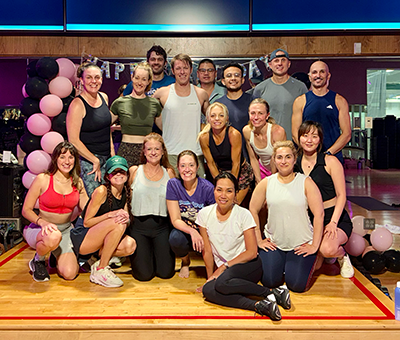    .jpg)  NatNews staff, dear readers, and friends were thrilled to be able to celebrate Alexis Derrow’s birthday recently |
| Upcoming Events |
Monday, August 31: Bryson Tiller at Dos Equis Pavilion; National Matchmaker Day |