| October 26, 2026 |
NatNews |
ISSUE 241 |
IS THE FOOD PYRAMID A THING ANYMORE?
|
Change is inevitable, and educational tools often experience slight or sometimes significant evolutions. The food pyramid has entered the chat. Since 1980, every five years, the U.S. Department of Agriculture (USDA) and the U.S. Department of Health and Human Services (HHS) publish The Dietary Guidelines for Americans, which provides advice on what to eat and drink to promote health and prevent diet-related disease. The most recent version includes a new food guidance visual that looks rather different than the one that disappeared in 2005 (the original was replaced by MyPyramid in 2005 and MyPlate in 2011 as nutrition science and approaches to communicating dietary guidance evolved). While the first food pyramid was initially introduced in Sweden in the 1970s, the USDA adapted and launched its version, the Food Guide Pyramid, in 1992. The new guidelines essentially flipped the old pyramid upside-down into an inverted pyramid. Protein and vegetables have moved from their former positions somewhere toward the middle of the pyramid to its base. Whole grains, which used to serve as the base, now sit at the smallest point. “One concern with the original pyramid was that it grouped foods together without adequately distinguishing their nutritional quality,” Dallas-area resident and registered dietitian Christina Heath said. “For example, refined grains and whole grains both fell under the grain category, despite having different nutritional benefits. The graphic could also be interpreted too rigidly without accounting for differences in individual needs, activity levels, health conditions, and goals. We now know that most Americans do not get enough protein, healthy fat or produce, so those have been moved to the top.” Heath said the updated inverted food pyramid should be viewed as a general framework rather than a set of rules everyone should follow exactly. “There are helpful principles in this approach, particularly encouraging people to prioritize nutritious foods and pay attention to the quality of their diets,” she said. “However, I would caution against interpreting the inverted shape as meaning everyone should dramatically increase protein or fat while avoiding carbohydrates, which are an important source of energy.” Heath added that individual needs also vary, and a graphic such as a food pyramid doesn’t serve as an all-encompassing dietary requirements representation for all of the different conditions, illnesses, life situations, etc. |
“Someone who is pregnant, an athlete, an older adult, or managing diabetes or kidney disease may need different nutritional priorities,” she said. “A visual guide cannot account for all of those differences. Ultimately, I would encourage people to understand the principles behind the pyramid rather than follow its shape literally. A healthy eating pattern should be personalized, sustainable, and appropriate for the individual’s health needs.” There are ample resources available as well as individuals with online platforms offering advice to others in terms of what they should be eating more or less of, but just because something is on the internet or social media doesn’t necessarily mean that it’s factual. Heath acknowledged that having general nutrition guidance is valuable because of the significant amount of conflicting nutrition information online that can make it difficult for people to know what to believe or where to begin. “A simple visual guide can provide a foundation and help people make more informed choices without needing to understand every detail of nutrition science,” she said. “However, I think the guide needs to be simple enough to understand without being so simplistic that it creates confusion. Nutrition is not one-size-fits-all, and people shouldn’t feel that they have failed if their meals don’t look exactly like a picture.” Heath added that she thinks that nutrition education should focus on what individuals can add to their diets rather than solely what they need to eliminate. As an example, she noted that encouraging someone to add protein to breakfast, include a vegetable at lunch, or choose a fiber-rich snack can feel more approachable than giving the individual a long list of foods to avoid. “A good nutrition guide should empower people to make choices with confidence, not create more anxiety or rigid rules around food,” Heath said. For individuals seeking to ensure that they have healthy diets and the proper nutrition they need, Heath recommends building balanced meals, prioritizing protein and fiber, eating a variety of food, and paying attention to hydration and regular meals without skipping them or going long periods of time without eating. Overall, Heath advises individuals to aim for consistency, not perfection. “A balanced diet is about your overall eating pattern, not one meal or one day,” she said. “All foods can fit into a healthy lifestyle, and enjoying foods for pleasure, culture, and connection is part of a healthy relationship with food.” |
DID YOU KNOW?
|
Unlike other large cats (lions, tigers, leopards, jaguars), cheetahs can purr but cannot roar because their voice boxes contain a fixed structure rather than a flexible ligament. |
PERHAPS IT'S TIME TO VISIT YOUR LOCAL LIBRARY
|
Good news for Matilda, Belle, and others with similar interests: libraries are not obsolete. While some components now operate differently (e.g., individuals may no longer need to open tiny drawers, dig through paper cards, and try to decipher the Dewey Decimal System), the library remains a staple to plenty of adults and kids alike. They are also no longer places solely for books, as they provide several digital resources and offer makerspaces for students to collaborate and explore hands-on activities with both low-tech and high-tech tools. Dallas-area resident and high school librarian Ashley Hill has seen firsthand how impactful libraries throughout their evolution have continued to be to countless individuals and said she believes that they play a significant role in society. “Even though it may be easy to order a book off Amazon or download it on your Kindle, libraries provide lots of programming for children and access for community members who may not have funds to purchase books of their own,” she said. “They also provide other free resources (internet access, meeting rooms, access to research, a safe space, etc.). It’s an important pillar to any community.” Hill noted that one aspect of libraries she appreciates most is that they provide free books to anyone. “Whether you are reading to learn or reading for enjoyment, it should never cost,” she said. “And especially for children—statistics show that the more a student reads, the more likely they are to be successful in school and learning.” For Dallas-area resident Stephanie Hone, there is zero doubt as to whether libraries are still an integral part of our current lives and culture. “Libraries house the answer to about 99 percent of our problems,” she said. “The other 1 percent is that you have to go there.” Hone is an avid reader and not only appreciates the convenience libraries offer her but also values the shared experience she is able to have with her two young girls. “The freedom to check out multiple books at once is liberating, and I love that there is a space to take my kids where they can find books to read and check out,” she said. Hone added that in a more digital world, libraries still remain valuable places and resources for youths and adults because of the various programs available and opportunities to meet for those who work remotely. “It’s a virtual space for adults to use an office if they might need, it’s a place for research, or it’s just a quiet space,” she said. “It’s a place for community. Several libraries host community events. Our library has an actual outdoor playground that is so inviting for kids, and they love it.”
|
And though the world is certainly much more digital than it has ever been, Hill acknowledged that many people still prefer the feeling of holding books rather than reading them on devices, and there are also plenty of individuals who are likely not able to afford devices on which to read digital books. “Even if the digital book itself is free, it still costs to own the device,” she said. “Library books are at no cost. And to be honest, I support both. Digital books provide access to a farther-reaching audience and people who may not have the means of transportation to get to the library. It’s important for your local library to provide access to both of these and many other resources.” Libraries offer several opportunities, including employment, continuing education, storytime and reading programs, networking, and ample educational tools. They can also serve as welcoming environments, particularly for the younger members of society. “The library is a safe space for lots of kids,” Hill said. “They have programming for kids to be a part of, especially in the summertime when parents may be at work.” At its core, the library is an organized and structured collection of resources and information to help people expand their knowledge without social and economic barriers and without the pressure to purchase anything. It affords essentially anyone the opportunity to read, which offers several benefits, including easing worries and tension, improving cognitive abilities, expanding the words one knows and incorporates in conversation, and improving focus and concentration. “Statistically speaking, reading has lifelong benefits, such as helping critical thinking skills, building your personal vocabulary, giving humans a universal experience they may never have in person, reducing stress, and helping with overall mental well-being and with brain activity and memory,” Hill said. “Every person can benefit from reading.” Like Hill, Hone acknowledged the essential role reading has played in her life as well as the effects she has seen it have in the lives of many others. “As a former English teacher, I have a full belief that reading heals, it brings people together, and it allows a safe place for people to feel seen,” she said. “Look at history—if they (people in question) are burning books and banning them, go find those books, and read them. There is a reason why they are powerful.” WEEKLY PHOTO OP 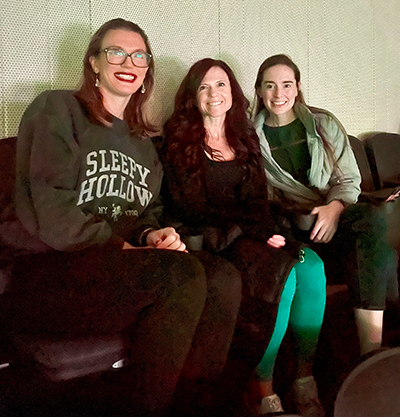      NatNews staff and dear readers played key roles in the Stars’ win over the Islanders |
| Upcoming Events |
Monday, October 26: Cowboys vs. Eagles Watch Party at Legacy Hall |