| August 10, 2026 |
NatNews |
ISSUE 230 |
THE BRAIN, THE BRAIN, THE CENTER OF THE CHAIN
|
The Scarecrow in The Wizard of Oz was rather wise to desire a brain. The human brain serves as the command center for the nervous system, enabling thoughts, memory, movement, and emotions. This complex organ allows for the interpretation of senses and control of movement; maintenance of cognitive, mental, and emotional processes; and maintenance of normal behavior and social cognition. As such an essential component of one’s body, the brain plays a central role in both an individual’s mental and physical health, as Dallas resident and neurologist Dr. Meredith Bryarly noted. “It influences our thoughts, emotions, and behavior, but it also helps regulate things like our heart rates, hormones, immune systems, and other bodily functions,” she said. “This relationship goes both ways—what happens in the body also affects the brain.” Dr. Bryarly cited stress as an apt example of such an occurrence and its impact on a person. “In the short term, the brain’s response to stress is protective and helps us respond to challenges,” she said. “But when stress becomes chronic, it can take a toll on both the brain and the body. Brain health is also influenced throughout our lives by factors such as sleep, nutrition, exercise, cardiovascular health, and our overall environments.” Thought activity that occurs within the brain can also play a significant role, as Dr. Bryarly said the way people think about themselves, their circumstances, and their health can affect both their mental and physical well-being. “Our thoughts and beliefs can influence how the brain responds to stress and, in turn, affect things like mood, energy, pain, and other physical symptoms,” she said. “This doesn’t mean that physical symptoms are ‘all in your head.’ Rather, the brain and body are constantly communicating with each other. Changing unhelpful thought patterns or beliefs can sometimes improve both emotional well-being and physical symptoms. In other words, how we think about a problem can influence how our brains and bodies respond to it.” People can also train their brains in other ways, including taking part in activities that help keep them sharp while building and maintaining cognitive skills. Dr. Bryarly said keeping one’s brain engaged appears to be beneficial for both mental well-being and long-term brain health, noting that activities such as reading, playing music, completing puzzles and games, learning new skills, and pursuing hobbies have all been associated with better cognitive health and lower rates of depression and loneliness. |
“The evidence is strongest for activities that are challenging, interesting, and require us to keep learning, rather than simply repeating something we have already mastered,” she said. “Activities that combine mental and social engagement—such as playing cards or board games, joining a choir, or participating in a discussion group—may be especially beneficial. Combining physical activity with tasks may also contribute additively, as physical activity is also associated with better cognitive performance. Benefits also track with lifetime cumulative engagement, and continued engagement into later life appears to also be beneficial for working memory.” Dr. Bryarly acknowledged that such research is observational, so it can’t be said with absolute certainty that the aforementioned activities directly prevent dementia. “But overall, the evidence suggests that keeping your brain active, learning new things, and staying socially engaged are worthwhile investments in brain health,” she said. Consistently making healthy lifestyle choices can positively impact one’s brain, and Dr. Bryarly noted that cognitive engagement across the lifespan is one of the more substantial modifiable determinants of late-life brain health. “It is something we build throughout our lives, rather than something we start worrying about when we get older,” she said. “Staying mentally engaged—through education, reading, writing, learning new skills, challenging work, or strategy games—appears to help build cognitive resilience and may delay the onset of dementia.” Dr. Bryarly added that cognitive engagement functions best as one element in a package of choices and actions one takes regarding his or her health, including diet quality, cognitive activity, physical activity, not smoking, and avoidance of heavy alcohol use. “Combining these behaviors with physical activity gives the strongest protection for global cognition and memory, specifically,” she said. “The takeaway point is to prioritize durable, complex, self-sustaining engagement—education, occupationally complex work, reading, writing, learning new skills, strategy games—and pair it with physical activity and vascular risk control.” |
DID YOU KNOW?
|
Dr. Harry Coover invented Super Glue™ by accident in 1942 while trying to create a clear plastic that could be used for precision gunsights for soldiers. |
WHEN YOU WORDLE, "BE BETTER THAN YOUR BUDDIES"
|
Though no one sees you lose (or win) when you’re playing solitaire (thank you for that reminder, TayTay), you can make sure that’s not the case with Wordle. Wordle launched publicly in October 2021 and was acquired by The New York Times in January 2022. For those unfamiliar or needing a reminder, there is a five-letter word of the day, and a player has six tries to guess it. Each guess must be a real word, and colors indicate accuracy: green means the letter is in the word and in the correct spot; yellow indicates that the letter is in the word but in the wrong spot; and gray informs the player that the letter is not in the word at all. And though Wordle is played individually, that doesn’t mean it can’t create a little competition amongst friends. Dallas resident Drew Mbiam said he initially learned of Wordle last year when he saw other people playing it, and now it’s part of his daily routine. Mbiam said he enjoys being able to play against his friends—he’s even part of a group chat of individuals who share their daily scores with one another to compare. “It makes it feel competitive,” he said. “I like bullying my friends with the English language and dropping all kinds of points and highlights on them like the GOAT LeBron James.” Dallas resident Sally Sanchez, who is also part of the group chat with Mbiam, said she began playing Wordle a couple of years ago with some friends of hers and now includes it as part of the way she begins her day. “I usually wake up super early, and Wordle is a great way to wake me up,” she said. “Instead of mindlessly scrolling (which I do plenty of), playing Wordle when I wake up gets my brain going for the day. I sometimes get stuck and have to come back to it, but at least I’m already thinking about it as I go about my day.” Sanchez added that competing against her friends makes Wordle a more engaging experience and motivates her to give her best effort each time she plays. “Who doesn’t love a little competition?” she said. “My friends I initially started playing Wordle with all stopped, so I wasn’t even playing every day. Now that I found a new Wordle group of friends, it’s the first thing I do when I wake up. I look forward to the challenge each day.”
|
Similar to Sanchez, for Mbiam, incorporating the component of claiming victory over one’s friends creates an extra intrinsic drive not only to complete the daily Wordle but to do so more astutely than one’s companions. “Bragging rights for winning adds stakes to the game and lowers the bar for enjoyment,” he said. “You don’t have to be good at the games—you just have to be better than your buddies.” Whether simply playing for fun, to win, or to feel included in a social circle, taking part in Wordle or other form of activity alongside other individuals (such as in a running or training group) can allow people to make connections with others and develop a much deeper sense of community. “Life is like video games—you can play solo, versus, or co-op,” Mbiam said. “There’s a time and place for every mode, which brings new aspects and dimensions to your approach.” The group chat in which Mbiam and Sanchez are includes several individuals from the running group (Train Pegasus) they are both a part of. For Sanchez, being part of this community not only makes running together special but also makes competing in Wordle against one another more meaningful, as it’s another connection they share. “I think, as adults, we all have busy lives, and there’s something wholesome about sharing a similar interest that brings complete strangers together,” she said. “We are all waking up at 4 in the morning to go run in 80-degree weather not because we’re being forced to but because we want to.” Sanchez said consistently engaging with and making concerted efforts to show up in such a community has not only helped her remain motivated but has also allowed her to form lasting friendships and share more than miles on the roads and Wordle scores in a group chat. “This group is also a big part of my social life,” she said. “In a culture that’s focused on working and being independent, having a community that shares similar interests, including Wordle, gives me something to look forward to every day.” WEEKLY PHOTO OP 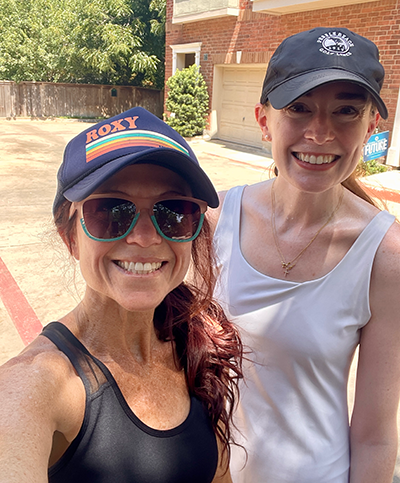    .jpg)  Regulators of BV and the trail (you’re welcome) |
| Upcoming Events |
Monday, August 10: Free Cult Classic Movie Monday — Old School at Sundown at Granada |