| April 27, 2026 |
NatNews |
ISSUE 215 |
WHERE DO YOU GET YOUR ENERGY (AND IS THAT A GOOD IDEA)?
|
Sometimes life can feel exhausting. Though there isn’t a fix-all button to make it all better, there are ways one can feel more energized and ready to take on whatever comes his or her way. Dallas resident and kinesiologist Kevin Kuhn, who brings expertise in biochemistry and sports nutrition, said chronic low energy is rarely the result of one contributing factor. Instead, it is almost always a combination of several physiological and lifestyle aspects, one of which is mitochondrial underperformance. “Your cells produce ATP (your actual energy currency) inside the mitochondria,” he said. “Sedentary lifestyles, poor nutrition, and chronic stress all impair mitochondrial density and efficiency. Less mitochondrial capacity means less cellular energy production.” Kuhn noted that additional common reasons people feel like they are lacking energy include blood sugar dysregulation, sleep inefficiency and poor sleep quality, dehydration, micronutrient deficiencies, and poor gut health. Another key contributing factor to feeling depleted of energy is a sedentary lifestyle. “Physical inactivity actually causes fatigue,” Kuhn said. “Aerobic fitness is directly tied to how efficiently your body delivers and utilizes oxygen. An untrained cardiovascular system makes every physical task metabolically more costly.” Many individuals opt for consuming caffeine, often through coffee and/or energy drinks, though Kuhn said caffeine in such forms doesn’t actually create energy but, rather, masks fatigue signals. “It prevents adenosine from binding to its receptors in the brain, so you feel less tired, but the adenosine still accumulates,” he said. “When caffeine clears, the fatigue hits back, often harder.” Kuhn added that moderate, strategic coffee consumption (one or two cups at least 90 to 120 minutes after waking up) can support performance without significant downside. And while coffee contains antioxidants and has legitimate cardiovascular and metabolic benefits in moderate amounts, it can certainly still have negative impacts. “The problem with coffee for regular energy use is that tolerance develops quickly, requiring more for the same effect,” Kuhn said. “Late consumption impairs sleep quality, and it’s a diuretic that can worsen dehydration.” Many energy drinks, Kuhn pointed out, combine significant amounts of caffeine with large doses of sugar (or artificial sweeteners), B vitamins (often in poorly bioavailable forms), and stimulants like taurine and guarana, and regular use is associated with elevated blood pressure, disrupted sleep, increased anxiety, and cardiovascular stress. “The bottom line is that neither coffee nor energy drinks address why someone is fatigued,” Kuhn said. “They suppress the signal without fixing the system.” In order for individuals to practice healthier habits of selecting better options when they feel like they need more energy and pep throughout the day, Kuhn said to think of doing so as an energy-producing infrastructure rather than looking for a switch to flip. “To start, I’d recommend pairing complex carbohydrates with protein and healthy fat at every meal,” he said. “This stabilizes blood glucose and sustains energy over three to four hours rather than 90 minutes. Prioritizing whole food carbohydrates like oats, sweet potatoes, rice, fruit, and legumes is important because they provide sustained glucose without the spike-crash of refined carbs.” Kuhn said the next step is to track one’s protein intake to see if he or she is getting a sufficient amount of amino acids and adequate protein to support the synthesis of neurotransmitters like dopamine, serotonin, and norepinephrine, all of which contribute to an optimally functioning nervous system. |
“Increasing dietary protein can also help prevent muscle protein breakdown that contributes to fatigue,” he said. “Adding more omega-3 fatty acids into your diet can also support energy production—they’re anti-inflammatory, support mitochondrial membrane function, and promote cellular energy efficiency. Iron-rich foods like lean red meat, spinach, and lentils (combined with Vitamin C for improved absorption) help support the blood’s ability to carry and transfer oxygen to working tissue so that adequate energy (ATP) can be produced.” And there is also a common form of liquid that can do wonders one might not always expect. “Water is the simplest and most overlooked energy lever,” Kuhn said. “Aim for light-yellow urine throughout the day. Electrolytes (sodium, potassium, magnesium) matter, too, especially for active individuals or those who sweat a lot.” And while people might think that activity can lead to exhaustion, the opposite can often be true. Kuhn said one of the most counterintuitive but well-established findings in exercise physiology is that, when dosed appropriately, exercise creates energy rather than depletes it. “Low- to moderate-intensity aerobic exercise is the single most powerful intervention for chronic fatigue,” he said. “Consistent Zone 2 training (conversational pace at about 60–70-percent max heart rate) drives mitochondrial biogenesis, growing more mitochondria and improving their efficiency. More mitochondria means more ATP production capacity at rest and during activity. Regular aerobic base training is why trained athletes feel more energetic from day to day—their energy systems are simply more developed. Even 20–30 minutes of brisk walking daily produces measurable improvements in energy and mood within two to three weeks.” Kuhn also suggested activities such as resistance training, yoga and mobility work, brief high-intensity intervals, and light morning movement upon waking to help spark energy and vitality. “The key caveat is that exercise frequency, intensity, and volume must be matched to recovery capacity,” he said. “More exercise is not always better. Overtraining is a real cause of persistent fatigue, especially in athletes who aren’t sleeping or fueling adequately. Progressive overload with adequate rest is the model.” Kuhn added that other ways people can improve their energy efficiency is first to consult their physicians about getting blood work done to rule out or address physiological root causes. After doing so, they can audit their sleep, which he noted is the most undervalued performance variable in existence, as no supplement, nutrition protocol, or training program compensates for chronic sleep debt. Additionally, they should periodize their stress loads, not just their training, as mental and emotional stress draws from the same physiological reserves as physical training. It’s also necessary for individuals to eat enough—relative energy deficiency in sport (RED-S) is increasingly recognized as a major driver of fatigue, injury, poor performance, hormonal disruption, and bone stress injuries in both male and female athletes—and to prioritize quality rest. Kuhn added that it’s important to address the mind-body connection, as anxiety, depression, and chronic stress are physical conditions with measurable physiological effects deeply intertwined with physical energy. Ultimately, Kuhn said that it’s essential for individuals to build habits, not shortcuts. “The energy problem is almost never solved by finding the right supplement or biohack,” he said. “It’s solved by consistently sleeping enough, eating real food in appropriate amounts, training with intelligence, managing stress, and staying hydrated. The fundamentals are unglamorous, but they work in ways that no shortcut can replicate over the long term.” |
DID YOU KNOW?
|
Classical composer Ludwig van Beethoven began losing his hearing in his 20s and was almost completely deaf by age 45, though he continued composing until his death at 56. |
DON'T CALL IT A COMEBACK—THE WEST END HAS BEEN HERE FOR YEARS
|
While it might seem like a ghost town at times, Dallas is not giving up on the West End. Officially established as the Dallas West End Historic District in the 1970s, this once sought-after area has declined over the years after experiencing a boom in the 1980s, with hot spots such as the Starck Club, Planet Hollywood, and Cinema 10. And many local millennials and GenXers will never forget the iconic Spaghetti Warehouse, which closed its doors for good in October 2019 after providing smiles, fullness, and memories to families and individuals since this original location opened in 1972. Though not what it once was, the West End still stands, seeking resurgence in a variety of ways. Dallas restaurateur Jay Khan—owner of West End Dining Group, which includes RJ Mexican Cuisine, 3Eleven Kitchen & Cocktails, The Liam’s Steakhouse, Chet’s Dallas, Moak’s Family Texas BBQ, and Mas Street Tacos—said from his perspective, the West End is one of the most complete and strategically located districts in Dallas, as it connects to so many other different integral areas of the city. “You’re surrounded by some of Dallas’ most important landmarks—the Sixth Floor Museum, JFK Memorial, Dallas Holocaust and Human Rights Museum, Perot Museum of Nature and Science, Dallas Museum of Art, and the Dallas World Aquarium,” he said. “You’re minutes from Victory Park and the American Airlines Center and right next to major hotels, shopping, apartments, offices, colleges, and the Kay Bailey Hutchison Convention Center. You also have close access to the Dallas Market Center (World Trade Market), making it a hub for business travelers and events.” Khan added that an additional component of the West End that makes it even stronger is accessibility, including DART rail stations, quick transportation routes, and plenty of parking lots, all of which allow individuals the opportunity to come enjoy the area. “Then you add things like horse carriage rides, historic streets, shopping, dining, and the deep-rooted history connected to Jack Ruby and the JFK story, and it becomes more than a district—it becomes an experience,” he said. “You can spend an entire day and night here without ever needing to leave.” Those who have been in Dallas since the ‘80s or ‘90s likely have positive tales they can tell about their experiences in the West End. Dallas resident Virginia Altick, who grew up in Dallas and has lived here throughout her adult life, said she can recall enjoyable memories in this district from many moons ago. “As a kid, I loved visiting City Golf, the mini-golf experience (or putt-putt, as we called it), and the arcades inside the West End’s main building,” she said. “This seemed like a far-away outing for me coming from the bubble (Park Cities). I remember being in awe of the multi-floor building because they had interesting candy, like fudge, on the first floor. Many of my friends held birthday or end-of-year parties there.” Altick said as a young adult, she remembers going with some of her friends to Club Blue, which was the largest DJ club she had ever been to. “Looking back, I think these were the early days of house music, or at least it was my first foray into the genre,” she said. “There was also an underground after-party with no alcohol where we would sometimes keep the party going. Separately, I also fondly remember a few restaurants, like The Palm, a Cajun-themed place, and a parade all being draws to the area.” But the attraction of a city’s popular area doesn’t always last forever.
|
“Similar to Taylor Swift, all things go through ‘eras,’” Altick said. “Deep Ellum and Greenville Avenue certainly have. Even Uptown has. The West End is no exception. It is hard to sustain vibrance forever and always. I personally don’t venture there, due to living on the east side of Dallas.” While the West End may not appeal to the masses as it once did, it certainly isn’t completely dead. Khan said he believes this area of Dallas is still one of the most historically important, as it is where much of the city’s early commercial growth began. He also noted that its ties to one of the most significant moments in American history, the assassination of JFK, brings it global attention. “This district represents the foundation of Dallas,” he said. “If we don’t protect it and keep it active, we lose part of the city’s identity. For me, it’s not just about preserving history—it’s about keeping it alive, relevant, and part of everyday life.” Khan said his enjoyment of the West End is about more than operating restaurants. Rather, he sees himself as building an ecosystem that allows patrons to enjoy quick lunches, happy hours, dinner, catering, festivities in private rooms, and full-scale events—all within walking distance. “When you combine that with surrounding experiences, you create a full destination,” he said. Khan added that what he delights in most is seeing people come in and not simply visit one place but, rather, explore, move, and experience the entire West End. “That flow creates energy, and that energy is what brings the district to life,” he said. “At the end of the day, it’s about impact—creating jobs, building strong teams, and helping transform the West End into one of the most exciting, connected, and complete destinations in Dallas.” It’s possible that the West End will eventually find its way into the hearts of those who don’t know it well. Altick surmises that declines in areas of cities and the obsoletion of certain businesses and attractions are often the result of each generation bringing its own needs and desires to the entertainment landscape, and tastes for experiences change as people become more health-conscious. Altick added that although she remembers the West End fondly, she can’t recall the last time she was there, though she would be more likely to visit again if it changed drastically like several other nostalgic areas have. “I would accept it as I accept the others—c’est la vie,” she said. “If people like and want to revive an area, then more power to them. I like an area that is walkable, so if they maintain the walkability I remember or expand upon it, then I’m all for it.” WEEKLY PHOTO OP 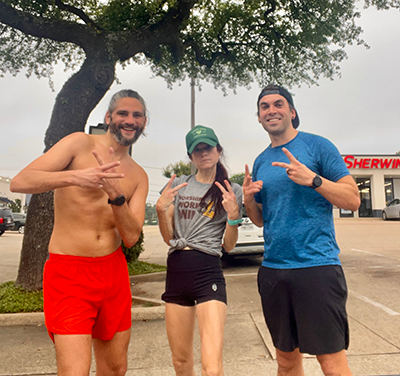    .jpg)  New album cover (again) with maybe one band member switched out for another |
| Upcoming Events |
Monday, April 27: Rangers vs. Yankees at Globe Life Field |