| March 30, 2026 |
NatNews |
ISSUE 211 |
HOW MUCH ARE YOU WILLING TO INVEST FINANCIALLY INTO FITNESS?
|
For many individuals, maintaining a healthy lifestyle that includes a focus on fitness and exercise is vital for overall well-being. A nationwide survey conducted by the Health & Fitness Association at the end of 2025 revealed that approximately 56 percent of American adults (approximately 151 million) indicated that they had personal goals for 2026, with 54 percent of those individuals (roughly 82 million) expressing that their focus would be on health, exercise, and fitness. Dallas resident Marie Puebla said fitness is a non-negotiable aspect of her life for more than one reason. “It goes beyond physical appearance—it directly impacts my mental health, discipline, and overall quality of life,” she said. “As a mom, student, and coach, fitness is what helps me show up as my best self in every role I have. It gives me structure, confidence, and a sense of control, especially during busy or stressful seasons. Over time, I’ve shifted my perspective from seeing fitness as optional or a ‘luxury’ to recognizing it as essential for long-term health and well-being.” Like Puebla, Dallas resident Amara Saucedo noted that fitness is extremely important to her lifestyle, especially as it pertains to self-care beyond the physical component. “I struggle with anxiety and depression, and movement has become a vital outlet for managing both,” she said. “The consistency and routine help me find a sense of peace, and I genuinely love being outside. It’s not just exercise—it’s part of how I take care of myself mentally and emotionally.” Maintaining a consistent physical fitness routine can also help individuals in other areas of their lives that one might not initially expect. Dallas resident and dedicated runner and HYROX participant David Cerezo is a frequent concert attendee and has found that keeping up with his training allows him to enjoy shows as he prefers. “If I want to stage dive on top of poor little Billy’s head and potentially knock out his tooth by accident, I want to do so in the best physical shape ever,” he said. “And having a good baseline of fitness and endurance will get me there if I exercise and eat well.” While health and exercise can certainly be wise investments in terms of time and energy, they sometimes prove to be rather significant financial investments, as well. According to the research findings from the previously mentioned survey, expected spending averages to $61 per month (approximately $733 per year) for those with health and fitness goals. Collectively, this would mean Americans will spend $60 billion in planned health and fitness spending by the end of this year. Cerezo acknowledged that while not every individual who enjoys focusing on fitness invests the same amount of money, he is willing to pay what is necessary to lead the health-centric lifestyle he desires. “It’s a no-brainer for me if I want to be physically fit, not only for athletic or everyday life endeavors but also for mental health,” he said. “For some, the financial investment forces an individual to commit to the task—the same way an avid runner pays for a race to keep that fitness momentum going.” Cerezo said in addition to spending on running shoes, which he estimates to total to more than $1,000 each year, now that he is a little older than he once was, recovery has been his current primary focus to help with the more intensive workouts. Such recovery care includes massage therapy, chiropractor and podiatrist visits, yoga, strength training at the gym, primary care physician appointments, etc. “If the national average car payment is more than $700 a month, then one can afford to invest that much into their health—but only if they actually care about their health,” he said. “Everyone’s body type and current health status are different, but perhaps between $200 and $700 a month is a reasonable amount.” |
Puebla said the most significant financial investment toward her fitness lifestyle is typically a combination of her gym membership and classes and event-related expenses, such as race entries, travel, and gear. Though costly at times, Puebla noted that they are necessary to ensure that she maintains her health as she achieves her goals. “Events like races or competitions can add up quickly when you factor in registration fees, transportation, and accommodations,” she said. “However, I believe they are worth the investment because they provide a sense of purpose, motivation, and community. They give structure to my training and create meaningful experiences that go beyond just working out. Additionally, investing in proper shoes and gear is important for performance and injury prevention, making it a worthwhile expense.” Puebla acknowledged that a reasonable monthly investment for fitness can certainly vary and be contingent upon one’s goals and lifestyles. For her personally, that amount would be anywhere between $150 to $300 per month. “This range allows for access to a gym or training facility as well as potential coaching or structured programming,” she said. “I see this as a valuable investment because it supports consistency, provides guidance, and helps me stay aligned with my goals. For me, it’s comparable to investing in any other essential area of life that improves my well-being and performance.” Saucedo said she does not spend a great deal of money on fitness-related components, and where she chooses to invest most financially in regard to health and exercise is replacing running shoes every three to four months. “While races can add up, I plan ahead by setting aside small amounts from each paycheck into separate savings for race entries and travel, which helps reduce stress,” she said. “I keep my clothing budget low—most of my gear is thrifted or affordable. If there’s one area I think is truly worth investing in, it’s shoes—not necessarily the most expensive or carbon-plated options but ones that work well for you and are replaced regularly.” Saucedo said she believes that a person does not necessarily need to spend a significant amount of money to reach his or her fitness goals. “There are plenty of affordable ways to stay active that don’t require sacrificing your time or finances,” she said. “I don’t follow a strict monthly budget for fitness. I don’t use apps or trackers, and I keep things pretty simple.” And while whether or not one opts to invest significantly or minimally financially into fitness and exercise is a matter of personal preference, economic ability, and additional factors, what’s important is for people to find what works for them and their goals pertaining to their physical and mental health. “Investing in fitness is really an investment in your health, longevity, and daily performance,” Puebla said. “When you prioritize things like coaching, gym access, or quality nutrition, you’re not just paying for workouts—you’re paying for guidance, accountability, injury prevention, and sustainable results. While it can feel expensive upfront, it often prevents larger costs down the line related to health issues or lack of structure. That said, I also believe fitness should be accessible, and there are ways to prioritize it at different budget levels.” |
DID YOU KNOW?
|
Emperor penguins can dive deeper than any other bird, typically diving between 330 to 650 feet and the deepest dive recorded at 1,850 feet. |
MAYBE "LEAVING ON A JET PLANE" ISN'T THE SONG FOR YOU
|
It’s not breaking news that a partial shutdown impacting TSA has resulted in staffing shortages, unpaid workers, and the ensuing extended wait times to get through airport security. You can still get to some places you want to go and avoid such a situation, and you’ll likely make your vehicle and gas stations rather happy. Perhaps it’s time to allow the dear road trip warriors to welcome you with open arms. And there are quite a few road trippers out there. Approximately two years ago, Michelin commissioned a survey conducted by OnePoll revealing that 73 percent of the 2,000 American drivers who participated prefer cars as their transportation mode for vacationing. Last summer, a research initiative by Enterprise Mobility showed that 60 percent of Americans surveyed desired to embark upon vacation life via their own personal vehicles or rental cars. Dallas-area resident Jessica Smith said what she truly enjoys most about experiencing a trip from the driver or passenger seat of a car is being able to soak in everything along the way. “I love road trips,” she said. “I love discovering the sights you’d never notice otherwise, and I always do a little research ahead of time to find quirky or must-see stops and great local places to eat. Some of my favorite moments, though, are the conversations in the car—the kind you only get when you’re on the road with nowhere to be but your destination.” Smith said one of the best trips she has ever taken was a recent journey to Big Bend and Marfa, Texas. “Where the wide-open sky meets the desert, the scenery was absolutely breathtaking,” she said. “Marfa itself was such a fun, quirky town with a strong artistic spirit. It felt like the perfect escape from city life—peaceful and unique, and at night, the stars were incredibly clear and unforgettable.” Like Smith, Colorado resident Erin Miller is a strong advocate for road trips, noting that she truly loves planning them and being able to see surprises along the way. “What I enjoy most is experiencing new places and people, and on a road trip, you not only get to visit a destination, but you also get to experience everything in between,” she said. “I also love listening to music, audiobooks, and podcasts along the way. For the most part, it can be a very relaxing experience, whereas I find flying and airports to be very stressful.” The most memorable and enjoyable road trip Miller said she has taken was when she and her husband, Jamie, went on a six-month escapade in their travel trailer. “It was incredible,” she said. “It took months of planning, but our goal was to see as many of the national parks in the west that we hadn’t previously visited, hike as much as possible, and explore cool towns in between. We drove from Texas through Arizona to California, where we spent time on the west and east side of the Sierra Nevada Mountains. From there, we drove to Oregon, Washington, Idaho, Montana, Wyoming, and Colorado." Miller said what she loved most about this excursion was the “absolute beauty” that she and Jamie experienced together. “From deserts to mountains to lush, mossy forests, we took in so many amazing views and explored so many places,” she said. “I found myself with tears in my eyes many times because I was so in awe of what I was seeing. There were so many surprises, too. Places like Bellingham, Washington; Whitefish, Montana; and our new hometown of Paonia, Colorado, touched our hearts and our souls.” |
Why some individuals opt for hopping in their cars rather than on planes to travel is not necessarily the same for others. For Smith, she said her preference for road trips over flying is because the journey itself becomes part of the adventure. “Getting there feels like its own kind of vacation,” she said. “If I had flown to many of the places I’ve visited, I would have missed out on so much—hidden gems, amazing local restaurants, and even the chance encounters with people along the way.” For Miller, who said she would absolutely rather drive than fly, much of her affinity for road trips is because of the flexibility and simplicity they allow. “I like to be able to throw my things in the car, put on some music, and just drive,” she said. “I like to find fun places to camp along the way or find cool hotels or Airbnbs. I like having the freedom to change my plans if I want. I don’t like airports or going through security or schlepping my bags around. We flew to Los Cabos, Mexico, and we talked about how next time we would rather drive down there to experience some of the small towns and the culture of that part of Mexico.” And quite notably, Miller said there is also another rather significant reason she and her husband prefer to travel by car rather than by plane. “One of the greatest perks of driving is getting to take our dog with us everywhere,” she said. “We hated not having her with us in Mexico and would rather drive so that we can take her.” Road trips often create additional and sometimes unexpected opportunities for adventure, which can certainly be an appealing aspect of traveling by car instead of by plane. Miller said adventure is one of the most important parts of her life. “Before going on the road, I felt I was always escaping from my life,” she said. “Being on the road taught me that adventure is something I need to feel fully alive. When looking for a place to ‘settle’ at the end of our trip, we knew we needed a jumping-off point for regular adventures.” And for Miller and Jamie, Colorado allows them to fulfill that longing. “We live frugally so that we can prioritize trips with our camper, hiking, mountain biking, and skiing,” she said. “There will come a time when our bodies won’t allow us to live this way, so we have to do it while we can. When we get older, we can fly to Europe and go sight-seeing.” Like Miller, Smith said adventure is a significant component of her life, noting that though it has always been important to her, as she gets older, it means even more. “I find myself feeling a deeper sense of gratitude and a greater appreciation for the simple things—nature, new experiences, and meaningful connections,” she said. “I also hope to model that sense of curiosity and exploration for my children, encouraging them to discover the world in their own way one day. Did I mention I love road trips?” WEEKLY PHOTO OP 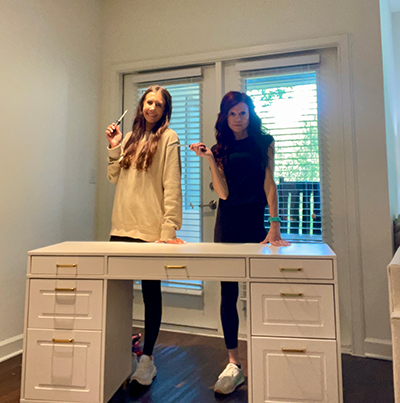    .jpg)  Yes, we did ensure the result of the most perfectly built desk—just don’t ask us about Step 11 |
| Upcoming Events |
Monday, March 30: Mavs vs. Timberwolves at the American Airlines Center |