| March 9, 2026 |
NatNews |
ISSUE 208 |
TITLE
|
It is not uncommon to see other drivers on the road having their own private car concerts as they make their way to whatever their destinations may be. An enclosed vehicle can create a safe space and allow you to (please sing this like Natasha Bedingfield) release your inhibitions. Dallas-area resident Josh Odegard said he prefers not to be in situations with silence, especially when he is in his car, so he has the radio on and turned up whenever he is driving anywhere. Most of the time, he is letting his voice be heard (by himself) alongside the musical artists. “I almost always have it on 107.9 Latino Mix DFW, which is all in Spanish,” he said. “I don’t know the words to most of the songs, but if I do, I’m singing along. And during commercials, I’ll change it to one of the English stations so that I have something else to sing along to.” When individuals hear singing, their mirror neurons activate similar motor networks in their brains, triggering them to engage their own vocal cords and sing along. This is likely a key reason why Connecticut resident Alicia Wyatt sings out loud while she is driving anytime a song she knows is playing. “I love singing along to songs in the car,” she said. “It gets me excited when I’m on the way to places, or it can help wake me up when I’m still a bit groggy from starting my day.” Similarly, Dallas resident Liz Orozco, a school counselor with three kids of her own, said she and her kids sing in the car together all of the time. “It’s decompressing and stress-relieving,” she said. And to Orozco, the level of talent has no impact on how loudly or passionately they belt the tunes they know. “I know I’m not a good singer, but I’m in the car with my kids, so it’s fine to be silly and laugh about it,” she said. “When you are in a safe space like your car, you are free from judgment.” Studies have shown that singing out loud can stimulate one’s mind and improve brain chemistry, alleviate stress, release oxytocin (a “feel good” hormone), reduce road rage, and even help a person deal with unprocessed emotions. |
Odegard said singing along with songs will not necessarily help him work through issues he is facing in life or create much of a significant change, but doing so in the safe and secluded space of his car can still help him at times when he needs it. “Music is one of my favorite things in life, and being able to sing alone makes me feel like I’m more a part of it,” he said. “I don’t think music is usually a therapy for me, but if I’m in a bad mood and have a chance to belt out a really long verse from a classic gangsta rap song, I’m usually feeling a little better by the end.” Odegard said he doesn’t like the sound of his voice when he sings, so he typically only does so when he is by himself or with his girlfriend, whether he’s in his car or elsewhere. “I know that I don’t sing very well, and I’m a little self-conscious about it, so I don’t usually sing around other people, unless it’s someone I know really well,” he said. “Or if I’ve been drinking—alcohol makes me sing better for sure.” Wyatt, on the other hand, finds that releasing one’s inhibitions through singing can certainly be an effective form of therapy for an individual. “I think it can be a great tool to help someone relax on the way home from work or during their commute and decompress from the day before switching gears to evening mode with family, friends, and other obligations,” she said. “Or it can be a great way to cheer up after a stressful time.” People process emotions and find relief from anxiety and stress in different ways, and places like a car create safe spaces for them to do so without feeling like they are being watched. Even if the windows aren’t tinted and allow a person to be seen, there is still a sense of autonomy and aloneness when an individual is riding solo in a vehicle. “When we are in our cars, we feel like we are in an encapsulated bubble—no audience to judge us,” Wyatt said. “It allows for that freedom of expression to help us decompress without being judged for our talent (or lack of talent). Music is such a balm to the soul, and I think feeling like we can sing along in the car without anyone judging us brings another level of peace and enjoyment.” |
DID YOU KNOW?
|
INFO. |
TITLE
|
Every once in a while, depending on where you are, you might look up in the sky and see a human soaring through the air beneath a parachute structure whose fabric canopy serves as his or her wings. What you are witnessing is paragliding (not to be confused with hang gliding), which began to grow in popularity in the 1970s when French parachutists Andre Bohn and Gerard Bosson discovered the possibility of launching from mountains rather than planes. One might wonder how paragliders stay in the air (and often do so for hours at a time). They are able to stay aloft by employing design and piloting techniques that harness air currents. The canopy wing is made of fabric cells with openings that inflate as the individual glides through the air, creating a “ram-air” effect. Paragliders control their devices by adjusting lines attached to the wing’s trailing edge to turn or to increase or decrease speed. In order to initially launch into the air, the pilot inflates the wing and then runs down a hill until flying speed is reached. To gain altitude and remain in the air, he or she then uses warm rising air known as thermals. Dallas resident Stephen Sorensen began his paragliding journey a couple of years ago when he was living in Utah in a townhouse right next to a paragliding flight park. “Every morning when leaving for work, I would always see people out flying at the flight park,” he said. “Watching the paragliders developed a strong yearning within me to take to the skies myself. The next thing I knew, I signed up for a course.” Sorensen completed his training at Cloud 9 Paragliding and said prior to his initial launch and even during his first couple of times taking part in this new activity, he felt both excitement and fear that he might die doing so. “I would make little mistakes like not landing correctly because I was not going into the wind or almost getting swept away by a gust while kiting,” he said. “It then started to feel like I was playing Russian roulette, with each additional jump possibly leading to me crashing or something. Finally, toward the end of my course, I started to become more comfortable again and could enjoy the awe of skimming across the edge of the earth’s horizon, being one with the air.” Sorensen was able to earn his P2 pilot certification, which required him completing more than 40 flights. He said he appreciates that the training process allowed him to push himself outside of his comfort zones. |
“It gave me the opportunity to start off my day in the mornings confronting fear, which I feel gave me confidence to face and work on various insecurities in other parts of my life throughout the rest of the day,” he said. “Nature, whether it be the winds of the air or the waves of the sea, is one of the best teachers in life.” Sorensen said one of the most valuable lessons he gained throughout his paragliding journey was the concept of micro corrections. “In paragliding, the wind always has some degree of variability, which requires you to constantly counterbalance,” he said. “However, if you overcorrect, you will only amplify the instability, which can send you oscillating out of control. It is paramount that you make micro corrections that are proportional in strength to the opposition you face.” Sorensen added that he believes that the majority of the hardships people face in life are the result of individuals’ overreactions to external challenges rather than the actual external challenges themselves. “Developing mastery in life is knowing how to make the necessary course corrections without overbearance when we make mistakes,” he said. Sorensen said he is grateful for his experiences in paragliding and would advise individuals who want to try their own new adventures but are fearful and/or anxious about doing so simply to visualize success to combat those feelings that could be holding them back. “Whenever you feel anxious, just close your eyes and imagine what it will be like when you achieve what you set out to achieve,” he said. “Let vision and desire for greatness fuel your drive, and let it overcome your fears.”
WEEKLY PHOTO OP 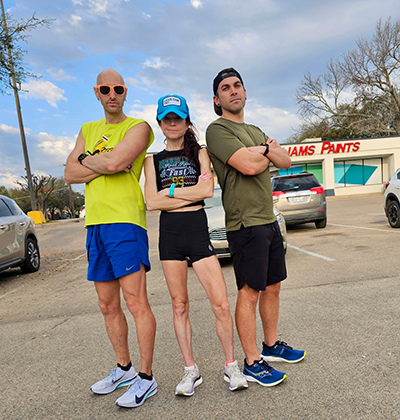    .jpg)  New album dropping soon, obviously |
| Upcoming Events |
Monday, March 2: Read Across America Day |