| February 16, 2026 |
NatNews |
ISSUE 205 |
WARM FEET BEFORE BEDTIME MIGHT ACTUALLY HELP YOU SLEEP BETTER
|
There are plenty of controversial topics in this world, and the idea of wearing socks while sleeping is no exception. Recent NatNews investigative research found that 9 percent of respondents of an online poll sleep with socks on always or most of the time, 17 percent sometimes wear socks in bed, 52 percent opt never to do so, and 22 percent claim that the sock-wearing choice is contingent upon the weather and/or season. Dallas-area resident Amanda Storer is one of the individuals who does not want her feet covered when she hops into her sheets at night. “No, absolutely not,” she said. “I get too hot. Hard pass on socks for sleeping.” The ice and freezing temperatures, such as those experienced at the end of last month throughout the Dallas area (and many parts of the U.S.) can change the sleeping-in-socks opinions of some people, including Dallas resident Elizabeth Cruz. She said she sometimes sleeps in socks in the colder months, but once those temperatures rise, she doesn’t even think about putting anything on her feet at night. “I think it’s just liking to feel extra warm and cozy in the winter versus during the summer feeling perpetually hot,” she said. Cruz said she can generally fall asleep within minutes of her head hitting the pillow, and while she might not wake up in the middle of the night if she mistakenly gets in bed with socks on her feet, it is likely that she will discover some shedding of articles of clothing for the feet in the morning. “More than once, I have accidentally fallen asleep with socks on and woken up without socks if I’ve gotten hot,” she said. Like Cruz, the question of whether or not socks should be on her feet while she’s sleeping is a seasonal situation for Dallas resident Adnaloy Nuñez. “During those rare freezing Dallas winter days, I use them to keep the chill away and stay cozy,” she said. Nuñez said it is certainly more challenging for her to sleep well if she is taken out of her comfort zone, including if socks were on her feet in a warm climate, such as where she previously lived in Venezuela. “Sleeping in a country without reliable A/C makes it almost impossible for me to settle down and find a rhythm,” she said. |
There are those individuals, though, who need socks to make it through the night comfortably. Dallas resident Eli Rodriguez said he opts to sleep with socks on his feet because of his aversion to feeling chilled in the slightest and wouldn’t be able to sleep well if he found himself in a situation in which his feet were bare. “It would take me out of my comfort zone big time,” he said. “I’m always cold, so I always make sure to sleep with the temperature set to at least 71 degrees in my house.” One study regarding this issue found that, while foot temperature doesn’t have a tremendous impact on one’s overall core body temperature, warming one’s feet prior to sleeping in a cool environment can have positive impacts on sleep quality through the ability to fall asleep more quickly, sleep for a longer time period, and awaken less often throughout the night. This occurs in part because the warming of the feet helps blood flow more easily to the skin, allowing excess heat to escape and the brain to receive the message that it’s time to fall asleep. Cruz said she has certainly noticed that she needs for her body to be at a pleasant temperature if she is going to find rest more easily. “If the temperatures don’t feel comfortable, it takes me longer to wind down,” she said. Of course, there are additional contributing factors that can cause a person to have specific needs in terms of temperatures, including those involving one’s feet at night. “I’m going through perimenopause right now, so my temp is all jacked up, often waking me up in the middle of the night from being hot,” Storer said. “Sometimes a foot outside of the covers helps, but sometimes I need more.” And though Nuñez is not in the same life stage as Storer, she often employs similar sleeping techniques, as she said she is a firm believer that people’s body temperatures, including in their feet, can have significant impacts on their sleep cycles. “Warm feet are essential for me to fall asleep in the winter,” she said. “Conversely, in the summer, I rely on the ‘one foot out’ method to balance my body temperature. It acts like a radiator, helping me cool down and reach deep sleep much faster.” |
DID YOU KNOW?
|
Glitter as we know it today was unintentionally invented in 1934 when New Jersey machinist Henry Ruschmann ground up a load of scrap metals and plastics extremely finely. |
HOW ATTITUDES CAN IMPACT THE FLYING EXPERIENCE
|
If you are not the owner of your own private plane, making it onto your flight can become quite an ordeal, especially if you become stressed or anxious in situations in which you cannot control several external factors. Dallas resident Grant Harrell, a frequent traveler who said he is on 15 to 20 flights each year, doesn’t think the airport process should be considered stressful, as many procedures have been in place since after September 11, 2001, but he acknowledges that there are certainly frustrations that can arise for travelers, particularly when it comes to wait times. “I have Clear and Global Entry, which includes TSA Pre-Check,” he said. “Clear basically makes no sense now because they’re taking your picture twice. Lines today in Pre-Check or Clear can be as long as standard entry. In May 2024, I was in Baltimore, and there was a long line with people having their initial pictures taken and then having to show their driver’s licenses. After waiting for my turn, I told the TSA lady she didn’t need my driver’s license. I stood in front of the camera, and within less than a second she said ‘nope, Grant, all good.’ The camera instantly identifies you, so the security is all tied to what you have in your bag.” Harrell added that the contents of one’s bags can often be the cause of irritation from other travelers. “It’s crazy what some people show up with thinking they can bring on the plane, which impacts TSA and everyone’s attitude waiting in line,” he said. Being put in such situations can cause some individuals to feel a range of emotions and even act differently than they typically would. Dallas-area resident and flight attendant Jade Parsons said she believes that traveling can undoubtedly bring out both the best and worst in people. “Even for seasoned or professional travelers like myself, it can be stressful, and stress triggers different reactions for different people,” she said. “A lot of it comes down to mindset. If you go into travel expecting the unexpected, you’re less likely to be completely thrown off when things don’t go smoothly.” Parsons said people often can become stressed and feel a bit frazzled as a result of a number of such issues—traffic delays on the way to the airport; shock at the daily parking rates; security lines being longer than anticipated; realizing too late that it’s 3.4 ounces, not 3.6 (goodbye, expensive face cream); hunger resulting from skipping breakfast because individuals were rushed and thought they would have time to eat at the airport; long restroom lines; and Starbucks mobile ordering not being available during peak times. “All of these micro-experiences compound into macro-feelings, and they can absolutely affect how people present themselves,” she said. “So yes, travel stress can cause people to behave differently than they normally would.” Dallas resident and pilot Ben Sewell said he does not believe that air travel has changed so much that it causes people to act differently, but he does think that expectations have changed, and civility isn’t what it used to be. “In a confined space like an aircraft, people have gone from accepting the limitations of what an airline can provide to a feeling of self-entitlement to bring excessive amounts of baggage and comfort items aboard while not being considerate of their fellow travelers,” he said. “The expectation has exceeded what can reasonably be met, so much of the stress that we see in air travel is more human-related than anything else, although when delays occur due to weather, maintenance, etc., it certainly exacerbates the situation.” The way people interact with others can certainly impact the individuals involved. Sewell said passengers don’t significantly affect him as a pilot, as it is a rare occasion that he needs to intervene in a dispute, and the attitude of a non-compliant passenger changes when the pilots address them personally. “It’s harder on the cabin crew and operations agents who manage the boarding process, though stronger enforcement of FAA regulations has helped improve things,” he said. “Still, there are passengers who are difficult, and the simple solution is to remove them from the aircraft, so it’s an effective deterrent for being abusive or combative toward crew members or other passengers.” |
As a flight attendant, Parsons has frequent direct interactions with passengers, but she said she makes concerted efforts not to let negativity and the like cause her to change her perspective. “Passengers’ attitudes do affect us but maybe not in the way people assume,” she said. “Do I lose sleep because someone wasn’t kind to me? No. Does it upset me if I greet every passenger boarding the plane and only a quarter say hello back? Also no. But does it make my workday more enjoyable when they do acknowledge me? Absolutely, 1,000 percent.” Parsons acknowledged that she is human and certainly experiences her own emotions and bad days, but she also knows that in such situations, she is in uniform and representing what she said is something much bigger than herself. “I can only control one thing: myself—my actions and my reactions,” she said. “I genuinely try not to let others’ attitudes affect me, but I’d be lying if I said they don’t have any impact. How people treat you can either positively or negatively influence your day, even if you remain professional, no matter what.” While life will present obstacles and circumstances that may cause frustration or anxiety, there are often solutions to help minimize such feelings. Sewell said in order to make travel as stress-free as possible, the answer would be to increase ticket prices that are more in line with what fares were 40 to 50 years ago. “Because travel has become so cheap, airplanes are always full, and sometimes etiquette suffers,” he said. “More expensive tickets would mean less-crowded airplanes and better accommodations on board, but the public demand for lower prices has made the travel experience a race to the bottom, so the solution isn’t feasible.” Ultimately, Sewell said it simply is not possible to create a completely stress-free experience anymore because people want more than can reasonably be accomplished. “Small improvements? We’re always working on that,” he said. “Bigger seats, more space, better airport experience? That’s difficult, and it’s not realistically achievable if you want the airline to stay in business.” Harrell recognizes that certain procedures must be in place and said he appreciates that the system has become more streamlined in recent years. “In today’s world, I’m not sure the process requires so many TSA staff, but it is a good employee process and not going away, even with those who think AI will replace human workers,” he said. “TSA is always working to make the process more efficient, and the system is here to stay, so our attitudes are tied to successfully boarding and heading out on our flights/journeys.” For Parsons, the solution is more intrinsic and a matter of people doing their parts more so at the heart level. “Kindness, a little grace, a dash of empathy, and a huge helping of patience—that recipe would serve everyone well,” she said. “Sometimes we expect others to know what we know, to understand the ‘why,’ to move at our pace, or to follow the same etiquette we do.” Parsons said the reality, though, is that everyone is different and moves through life differently. “We’re all invited to the same party called life, but not everyone shows up dressed to impress, speaks eloquently, shares the same values or morals, or puts their best foot forward,” she said. “Ultimately, it’s up to each of us to decide how we show up and to make the best of the experience, even when others don’t.”
WEEKLY PHOTO OP 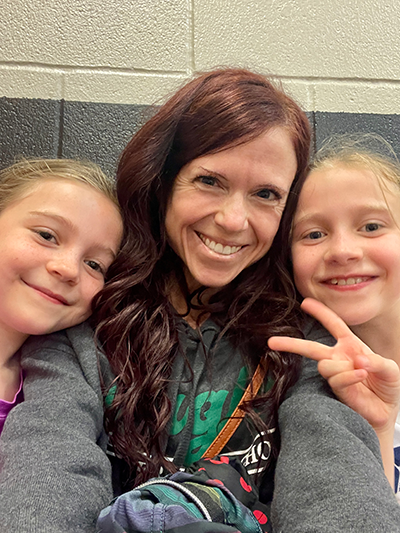    .jpg)  The NatNews leaders and some future dear readers recently enjoyed a break between some intense YMCA playoff basketball games |
| Upcoming Events |
Monday, February 16: National Almond Day |