Life is filled with busyness and chaos in the form of meetings, events, deadlines, and several other time-oriented occurrences, and it can often become stressful to try to keep track of everything.
Thanks to technology, many people have become dependent upon apps on their phones and/or computers to help them keep track of their schedules, though some individuals still enjoy the tactile experience of writing things down in a physical planner or calendar.
Dallas-area resident Josh Odegard runs his own IT services company (Key03 Technologies LLC), helps manage two separate running groups, and has an active social life, so he heavily relies on certain apps to help him stay organized, especially when coordinating with his girlfriend, who also has a full schedule.
“Thank God for Google,” he said. “I use Google for almost everything and not just because it makes better phones—which it does, just so we’re clear—but I use Google for most things because it has apps for everything, and they all work well together. I have the Google Calendar app on my phone, and I use the home screen widget that shows me a scrolling list of events that are on my calendar for the next week. It updates in real time, so items disappear as their scheduled times pass. It also shows all of the calendars that I have set up in my Google Calendar account.”
Odegard has separate calendars for his work life and personal life and shares his personal calendar with his girlfriend and best friend, and they also share their calendars with him.
“I can see all four calendars together, or I can filter it so that I only see the calendars that I’m interested in at any time,” he said. “I also have the Google Calendar website open in my browser at all times in case I need to see something quickly while I’m working.”
Odegard appreciates that Google Calendar integrates with Google Tasks, allowing him to see any to-dos or reminders that he’s created on the web calendar and in his phone widget, which helps him remember little notes or tasks more easily. Google Calendar is also integrated with Google Gemini, the AI assistant that’s built into Android phones and Odegard’s Google Home speakers.
“At least once or twice a day, I just say out loud ‘hey, Google, remind me in five minutes to blah, blah, blah’ to set a quick reminder for something I need to do later but don’t have time to write down in the moment or don’t trust myself to remember even five minutes later,” he said. “One of the speakers in my house will pick it up and add the reminder to my Google account. I can then see it on my calendar anywhere I check it, and a reminder pops up on my phone, as well.”
Odegard said he also sets reminder notifications for many of his Google Calendar events. For instance, when he has a trip planned a few months in advance, after he adds the trip to his calendar, he will then add reminders for six, four, and two weeks before the event, and for a closer event, he will often set one to three reminders a few days prior.
“The repeated reminders help me remember when I have events coming up, even if they’re not as big as a trip,” he said. “Sometimes I just don’t want to forget that I only have three or two weeks or one week left to file my taxes.”
There are some individuals, though, who prefer to go about keeping track of their schedules in more old-school tangible styles. Dallas-area resident Megan England, who is not only the official fashion correspondent of NatNews but is also a high school teacher, said during the school year specifically, she uses a giant desk calendar.
“I like that it gives me a bird’s-eye view of an extended period of time,” she said. “It also allows plenty of space for me to jot down smaller details to remember each day.”
England said she doesn’t keep this sort of schedule organization throughout the entire year, though.
“During the summer, I don’t know what time, day, week, or month it is,” she said.
There are also individuals who opt to stay on top of life and all of its events, obligations, and other social occurrences in methods that might make more sense to them than to others.
“I’m chaotically organized,” Dallas-area resident Nikki East said. “I use a calendar on my phone, a physical planner, sticky notes, dry erase boards, OneNote, etc.”
East said having multiple ways to keep track of her tasks and agenda aligns with the way her brain functions.
“I require the structure that organization provides, but I also require flexibility around what that organization looks like,” she said. “Yet, I don’t think I could even define the purposes of the various methods—chaotic organization.”
Dallas-area resident Robyn Allen said she also uses a combination of means to make sure that she manages her schedule effectively. For Allen, this includes her phone app, an old-school planner, and her brain.
“I still like to write physically on paper,” she said. “I remember best this way.”
Allen said she believes that there is no specific correct means by which an individual needs to keep track of his or her day-to-day activities.
“Whatever works for each person, then run with it,” she said.
Like Allen, East said she thinks that people should manage their time in the ways that are most effective for them.
“As long as a person honors their responsibilities and obligations, especially if others are involved in some way, then I’d say it depends on the person,” she said.
As with several areas of life, there doesn’t necessarily need to be a standard operating procedure, as different personalities and problem-solving and decision-making abilities are going to discover effectiveness that is specific to the individuals and how their minds function.
“I feel we should always set ourselves up for success in whatever way we can,” England said. “Being prompt and remembering details are all a part of having good manners. Having a tracking system accomplishes both of these things.”
And though Odegard has found his go-to methods that help him stay on top of everything he needs to complete, attend, etc., he also has questions as to whether or not he would truly need them had he never extensively used them in the first place.
“While I definitely believe that apps like Google Calendar and Google Tasks are great for helping to remember appointments, tasks, birthdays, and more, I also wonder if relying on these types of apps for a long period of time is why I need apps like them to be able to remember everything,” he said. “I do have a very full life, so there is a lot to remember, but if I don’t have to remember things myself, does my brain lose its ability to do it by itself? I don’t know—it’s the chicken and the egg, I guess.”
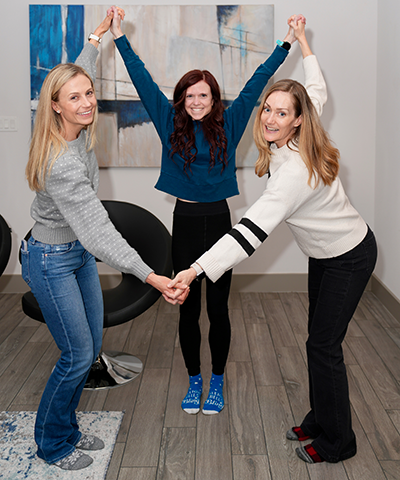
WEEKLY PHOTO OP


.jpg)

NatNews and some dear readers brought back the heart made of humans