Trouble viewing this email? Visit NatNews online to view this issue or any of our archived issues!
| November 10, 2025 |
NatNews |
ISSUE 191 |
BRINGING IT BACK TO THE BACK
|
Some individuals may remember being kids and young adults and running around all day with no pain, sleeping in contorted positions without suffering any consequences, and feeling invincible enough not to worry about stretching or the functionality of one’s back. And then aging happens. While getting older doesn’t necessarily mean back pain is inevitable, it’s not uncommon for aches and annoyances to increase as the years continue to pass. According to Penn Medicine, studies indicate that up to 85 percent of people will experience some form of such pain in their lifetimes. Ultimately, this is a result of the human body wearing down over time. “As we age, our bodies naturally lose muscle, flexibility, and joint mobility,” Dallas resident and kinesiologist Kevin Kuhn said. “The spine also changes as vertebral discs lose hydration, and supporting muscles do not stabilize as effectively as they used to. Over time, these small changes add up.” In addition to such natural occurrences, Kuhn said there are also lifestyle habits and activities that can lead to back issues. “Long hours of sitting, whether at a desk, on a bike, or on the couch, and repetitive motions like bending or twisting through the lower back can make the spine stiffer and more vulnerable to pain or injury,” he said. “The good news is that most of this can be managed and even prevented with the right approach to movement and strength.” Kuhn said the repetitive hip flexion involved in running and cycling—as well as in simply sitting for long periods—keeps the hip flexors in a shortened position. As a result, the pelvis can tilt forward and force the lower back into excessive arching, known as lordosis. “Imagine holding a bowl of cereal,” Kuhn said. “That bowl represents your pelvis. If your hip flexors are tight and your pelvis tips forward, it is like spilling the cereal out of the front of the bowl. The goal is to balance the bowl, bringing the pelvis back toward neutral, which helps reduce strain on the lower back and prevent pain.” While some aches and pains might simply be a result of aging, there are ways to prevent more serious conditions. Kuhn, who helps individuals overcome a variety of different injuries and issues through personalized treatment at Athlete Factors, said the best way to take care of one’s back is actually by incorporating a full-body plan. |
“Prioritize strengthening the back side of the hips, including the glutes and hamstrings,” he said. “Focus on mobilizing the front of the hips, especially the hip flexors and quads. Stabilize the core with plank variations, hollow holds, and exercises that resist flexion, extension, and rotation. Improve mobility through the upper back with thoracic extension and rotation.” Kuhn said together, such strategies will help the lower back move and feel better. He also advises some additional measures to ensure better overall back health. “Mix in strength training, mobility work, and cross-training to stay balanced and resilient,” he said. “Pay attention to posture because how you sit, stand, and move throughout the day matters just as much as your workouts.” When back pain does become more prevalent for an individual, Kuhn said the biggest mistake one can make is to stop all movement. He said short-term rest can be helpful, but too much rest can actually delay recovery. Gentle forms of movement (e.g., walking, light stretching, or low-impact activity) promote blood flow and healing. “When I work with someone experiencing back pain, I start by identifying why the pain is happening,” Kuhn said. “If you are not assessing, you are guessing. Find a kinesiologist, physical therapist, or chiropractor who will evaluate joint range of motion, neuromuscular tension, and muscle imbalances to find the root cause. In many cases, the pain comes from a combination of tight hip flexors, weak hip extensors or core stabilizers, and repetitive strain. Based on the assessment results, I focus on restoring mobility where things are tight, building strength in weak areas, and teaching movement patterns that prevent the problem from returning.” When it comes to back issues, Kuhn said he knows the pain all too well. He said improper lifting caused a back injury that stopped his progress during his senior year of college cross country and track and field years ago. “If I had known how to assess my movement at that time, I would have focused on stretching my hip flexors and strengthening my glutes and lower abdominals,” he said. “I could have saved myself a lot of pain. Those lessons now shape how I help others move better and avoid the same setbacks.” |
DID YOU KNOW?
|
An ostrich’s eye, which is about 5 centimeters (almost 2 inches) in diameter, is larger than its brain. |
LOOK AT THIS PHOTOGRAPH—EVERY TIME I DO, IT MAKES ME LAUGH
|
Pictures allow people to have visual depictions of moments and memories that can take individuals back to those times and evoke certain emotions—joy, fondness, sorrow, regret, pride, nostalgia, and plenty more. Images also carry stories with them, and one picture can tell several different stories from various individual perspectives. The purpose for snapping pictures and holding onto them can be unique to the people who take them, as well. “I like to capture the moment—a time and place and a feeling,” Houston-area resident Darla Hogaboom said. Photography can also become a true passion for people. Dallas resident Damon Yousefy, who is an attorney in full-time career, has taken up photography as an unpaid side hobby simply for the joy of it and invested in a professional camera, lenses, and lighting gear. “I love taking photos and making sure they are high-quality because I think we need to remember positive moments in our lives, whether it’s a get-together with friends or a beautiful sunset,” he said. “I love to see the joy it gives people when they have good photos of themselves, whether it’s a headshot or a group shot.” Such a hobby can also be enjoyed with a smartphone when out and about in daily life. Dallas-area resident Mark Olateju said he enjoys capturing key moments that turn into future memories in his life and the lives of others. He also believes that pictures play a significant role in people’s lives today. “It’s the very reason that boomers and other people of the older generation got on social media platforms in the first place—to see pictures of their kids and grandkids who may be several states or countries away,” Olateju said. Olateju said pictures also play vital roles in online dating apps and in serving as visual evidence to help individuals track how they are doing in reaching their goals. “People now want to see recent pictures and full-body pictures of potential mates so that they know what they are getting into,” he said. “And pictures play an important role for people trying to make lifestyle changes. They gauge their progress from ‘before’ and ‘after’ pictures.” According to the USC Laboratory of Neuro Imaging, the average brain generates 48.6 thoughts per minute (which adds up to about 70,000 thoughts per day), so some recollections can get lost in the shuffle. Captured images, Yousefy said, can create value as people’s memories fade. “They contain a lot of emotion,” he said. “Friends may move away, kids grow up, and vacations end, but good photos remind us of those moments and how we felt in them.” For Hogaboom, photos are taken for various reasons for different individuals, whether those reasons are more sentimental or more focused on getting likes and comments on platforms such as Instagram, Facebook, and other outlets. “The value comes from those reasons,” she said. “Family photos still hold value, but social media has weaponized photos—‘look at me and where I am,’ leading people to believe that validation comes from strangers’ envy or admiration.” |
But Hogaboom enjoys storing pictures so that she can remember certain moments in her life and experience the emotions she felt at the time and the emotions those photos create in the present. “I do look back at photos and enjoy the memories they evoke,” she said. “I will often have something cross my memory and then go and find a photo, and that expands my joy.” Olateju said he looks back at pictures on a daily basis. He attributes doing so to the years from when he was 13 to almost 22 years old and didn’t take any pictures. “I’m making up for lost memories,” he said. “I also enjoy reposting old pictures of my family and friends. Many of these pictures they don’t even remember taking.” Like Hogaboom and Olateju, Yousefy said he also enjoys looking back at old photos and thinks he likely does so more often than other people do. “I use Amazon Photos for photo backup, and it has an ‘On This Day’ feature that helps me remember photos going back even decades,” he said. “It’s nice to look back sometimes instead of always looking ahead.” Not everyone is always inclined to take photos, and doing so is certainly a matter of individual preferences. Some individuals say they like to experience moments when they are in them and not focus on taking pictures and videos to document the memories. Yousefy said he thinks it’s important to take at least one photo to remember the event or experience, and Olateju said he believes that one can still be fully present while also capturing those moments with photos. “Who says they have to be mutually exclusive?” Olateju said. “You can do both.” Hogaboom, though, said she believes there are some situations when keeping the camera or phone tucked away is more beneficial. “I think we should all be more mindful of the things we get to experience in person without taking a photo,” she said. “Some things are better to just have in your memory.”
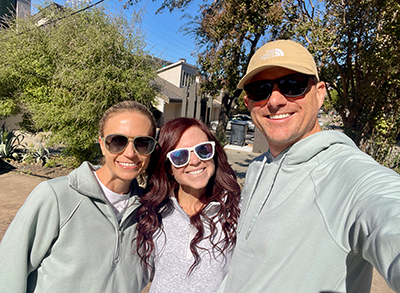
WEEKLY PHOTO OP ![]() ![]() ![]() ![]() ![]() ![]() NatNews staff and some dear readers embraced the wind on a beautiful day to catch up on African adventures and all things life |
| Upcoming Events |
Monday, November 10: Mavs vs. Bucks at the American Airlines Center |